I stumbled upon this one accidentally. I was walking through Brooklyn with my family and this building caught my eye. The once clean and beautiful little North Side Bank is now a hip little surf shop. https://pilgrimsurfsupply.com/
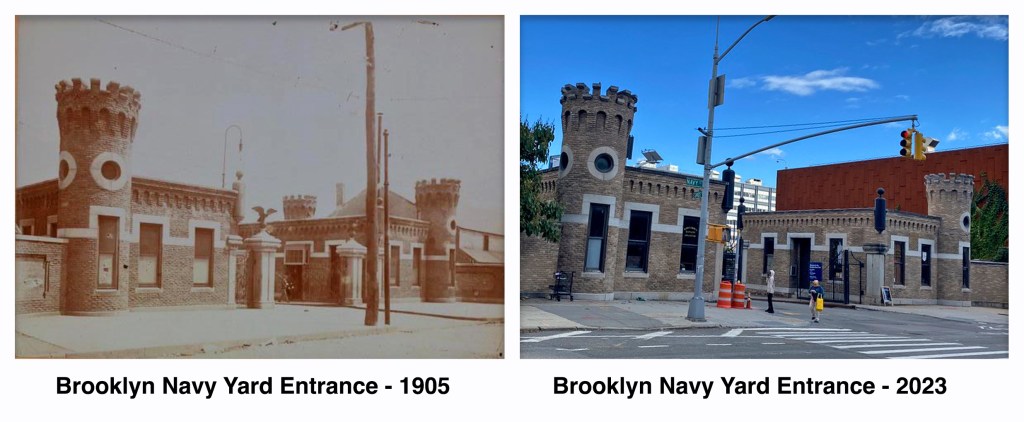
Brooklyn Navy Yard is changing fast but some things still remain.
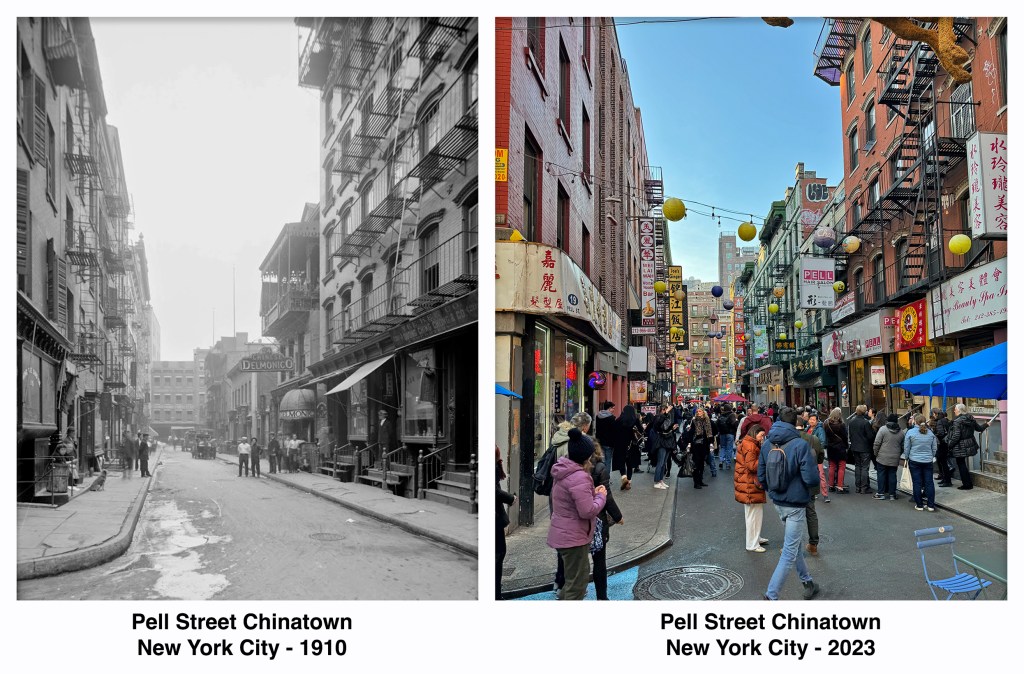
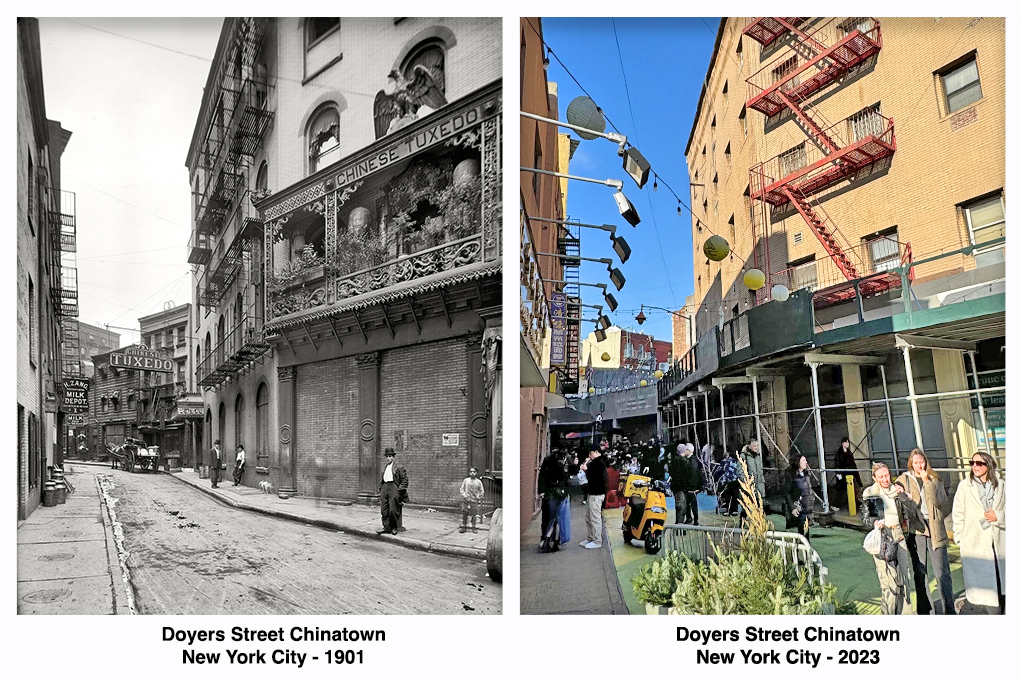
Take a look at these before and after photos captured during a recent Open House New York tour, expertly led by the delightful Taylor Zhou. The tour covered a range of fascinating topics, but one of the most interesting and often overlooked was the history and impact of the Chinese Exclusion Laws passed in 1882. These laws had a significant impact, dramatically limiting immigration from China and virtually eliminating any Chinese women from coming to the US. If you’re keen on learning more about this critical issue, be sure to check out the 1882 Foundation at (https://1882foundation.org/about-the-foundation/).
In 1909 many nations and communities in the U.S. celebrated the centennial of Abraham Lincoln’s birth. The Centennial Celebration Committee of New York City asked City Hall for $25,000 ($742,000 today) in 1908 for the event.
CHICAGO, ILLINOIS
Chicago organized a committee of 100 citizens, who raised $40,000 ($1.2 million today) to sponsor a week-long celebration to outdo the efforts of any other city in the United States as an example of patriotism.
Located in the heart of downtown Chicago is the Fine Arts Building, also known as the Studebaker Building. It is located at 410 South Michigan Avenue, across from Grant Park, in the Chicago Landmark Historic Michigan Boulevard District.
It was built for the Studebaker company in 1884–5 by Solon S. Beman, the architect for the town of Pullman, in the Richardson Romanesque style. As the Studebaker company outgrew this headquarters, the Studebaker family converted the building to studios for artists, musicians, architects and others. The building’s role later expanded when it became home to both the women’s suffrage movement and the Arts and Crafts movement in the Midwest. To this day, the building remains true to its art roots, still housing art galleries and design firms.
It’s December 8, 1893 – The World’s Columbian Exposition just ended in Chicago, which saw an influx of people and made the Windy City a truly international destination. Imagine that you are on the corner of Michigan Avenue and Adams Street in downtown Chicago. Some modest buildings dot the skyline, and there’s a little hustle and bustle in the streets.
You look east and see open land – no Millennium Park with sprawling grounds – but you spot something new. A stately, classical Beaux-Arts building: the Art Institute of Chicago.
125 years later, soaring skyscrapers and even more city-dwellers populate Michigan Avenue, but the Art Institute still stands proudly and is considered one of the leading art museums in the world.
One of my favorite things in the world is a good bookstore or library. This beautiful bookstore in Porto, Portugal was an inspiration to J. K. Rowling for the moving staircases in Hogwarts.
Along with Bertrand in Lisbon, it is one of the oldest bookstores in Portugal and frequently rated among the top bookstores in the world (placing third in lists by guidebook publisher Lonely Planet and The Guardian).
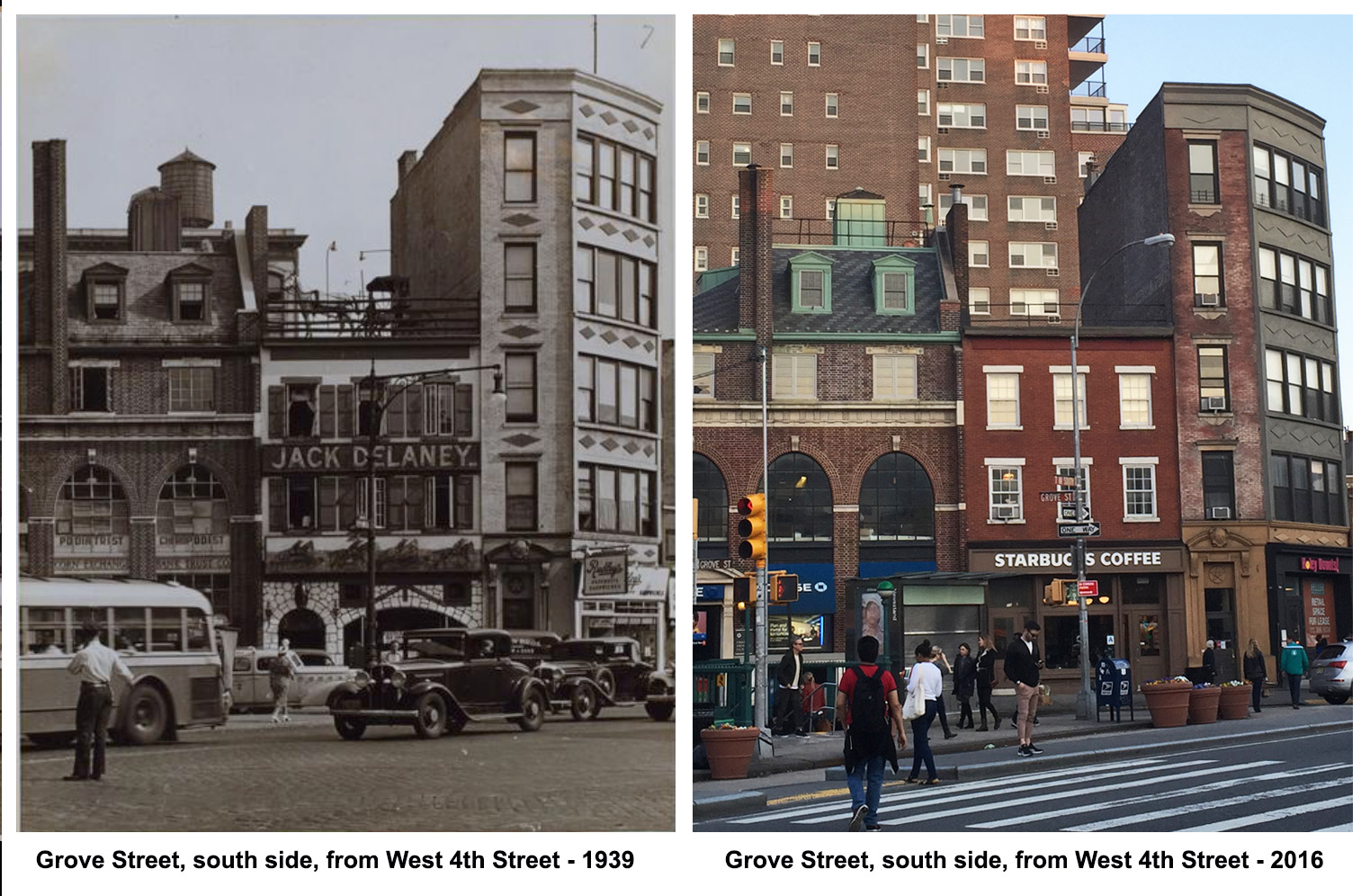
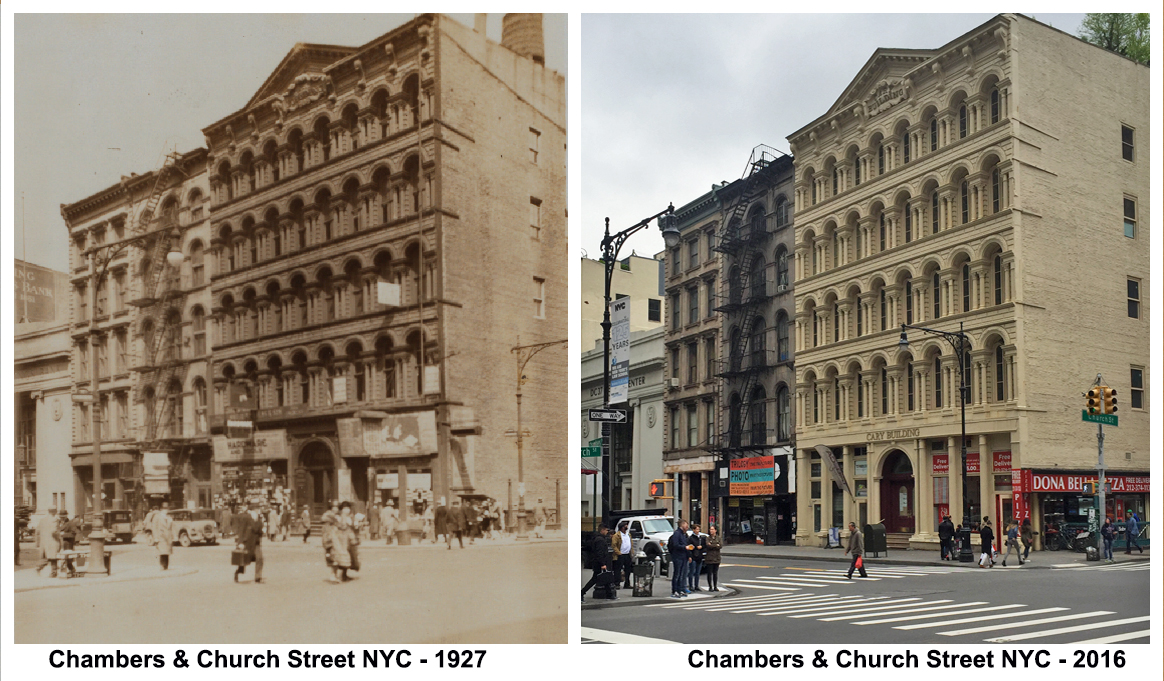
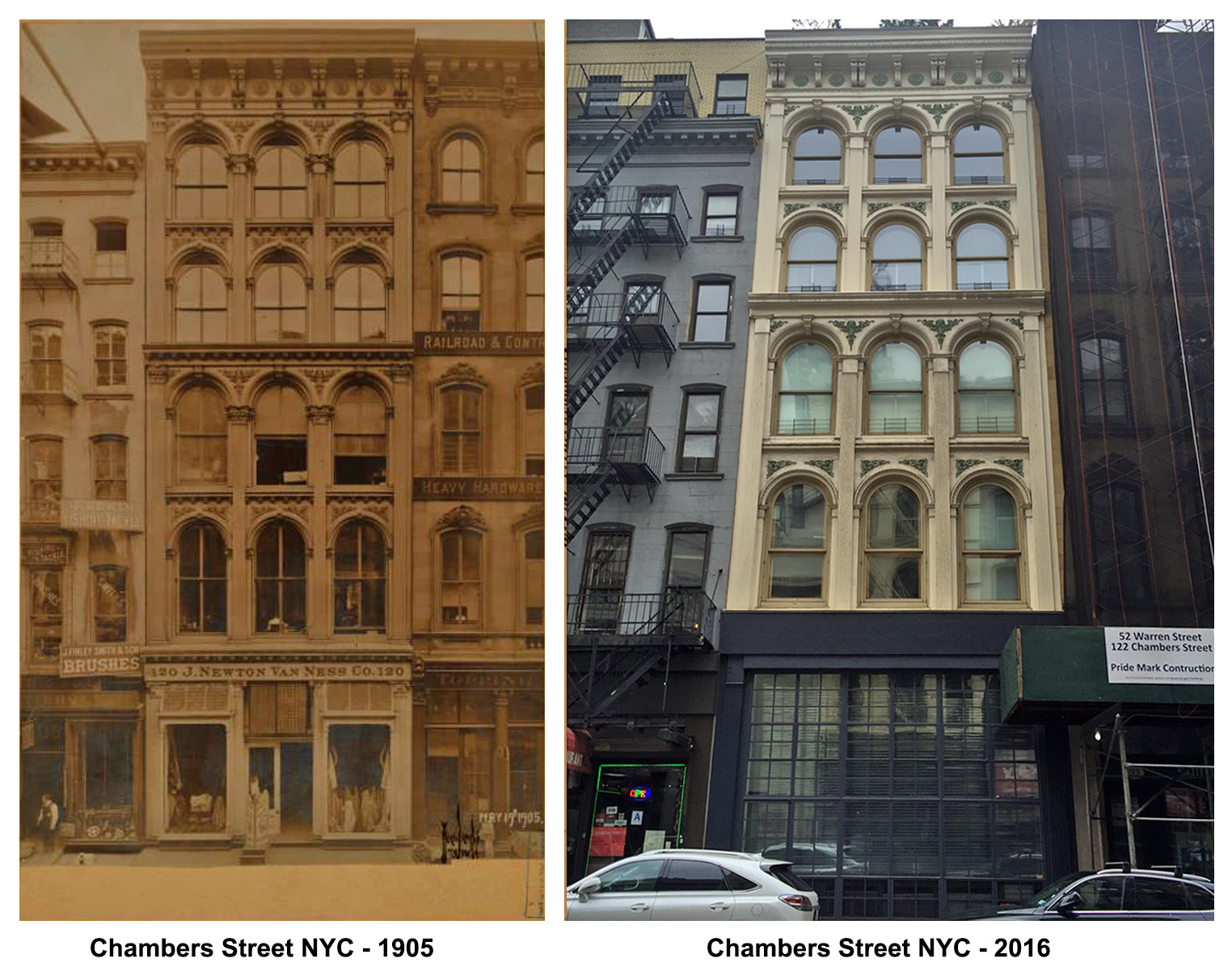
Great to be back out in the world again! Here are some before and after finds from Brooklyn and Manhattan this past Fall.
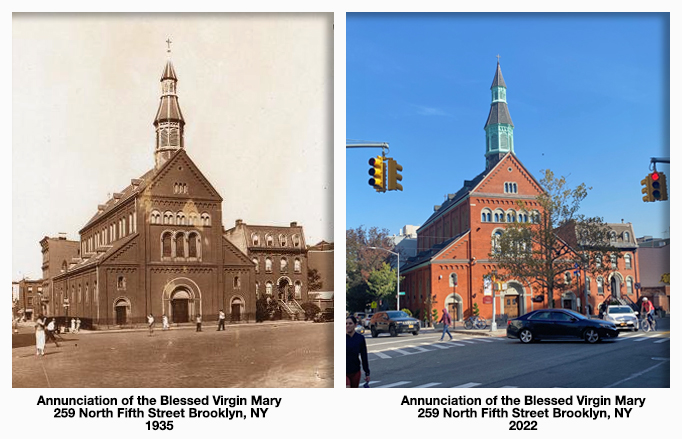
The Roman Catholic parish of the Annunciation of the Blessed Virgin Mary, located in the Williamsburg area of Brooklyn, was established in 1863. F.J. Berlenbach, Jr., designed the Lombardian Romanesque basilica in 1870.
The Austin organ now in the Church of the Annunciation was originally built in 1912 for St. Peter’s Episcopal Church, Morristown, N.J. In 1930, St. Peter’s installed a new Skinner organ (Op. 836), and the Austin organ was acquired by Annunciation Church.
Bleeker St. at the NW Corner of Bowery 1934. Cool to see the old elevated rail line in the background of the old photo. Too bad they couldn’t have saved it for another Highline.
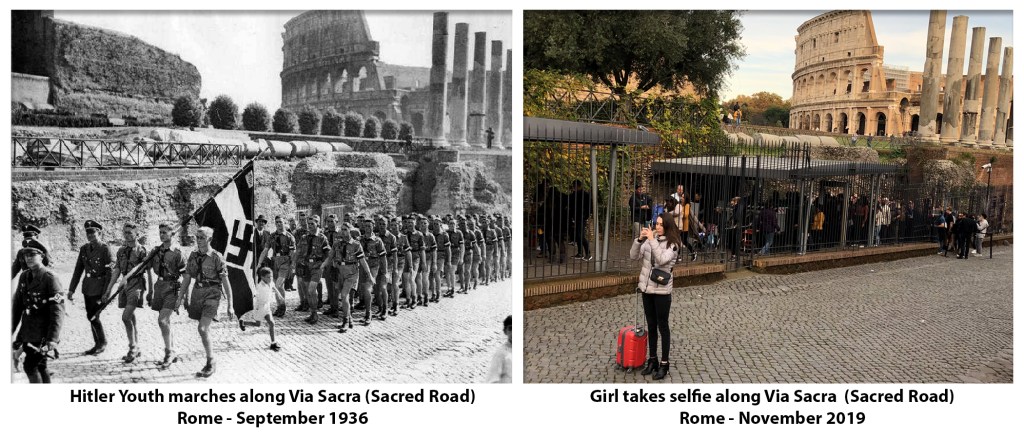
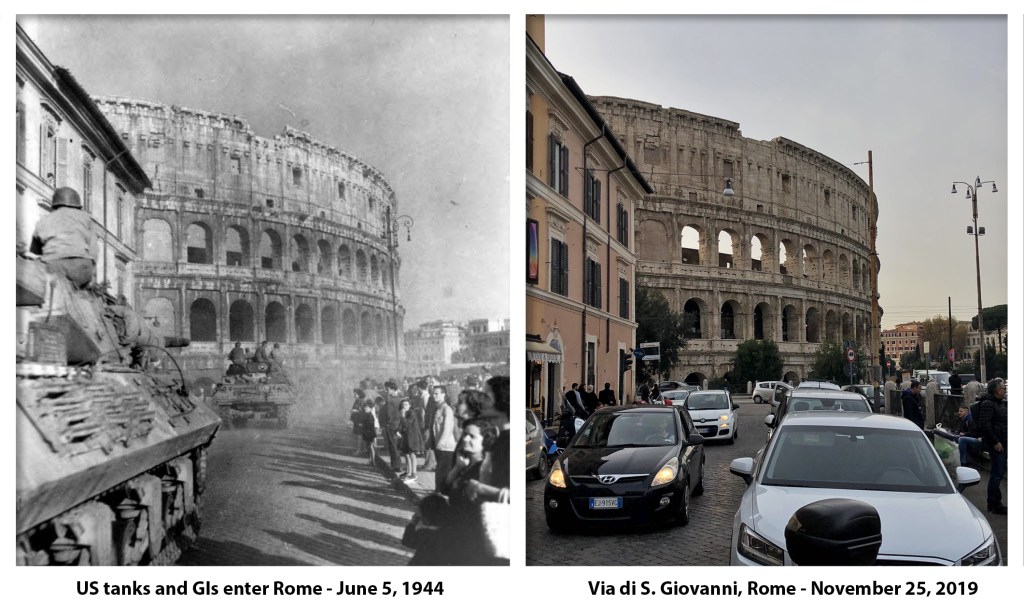
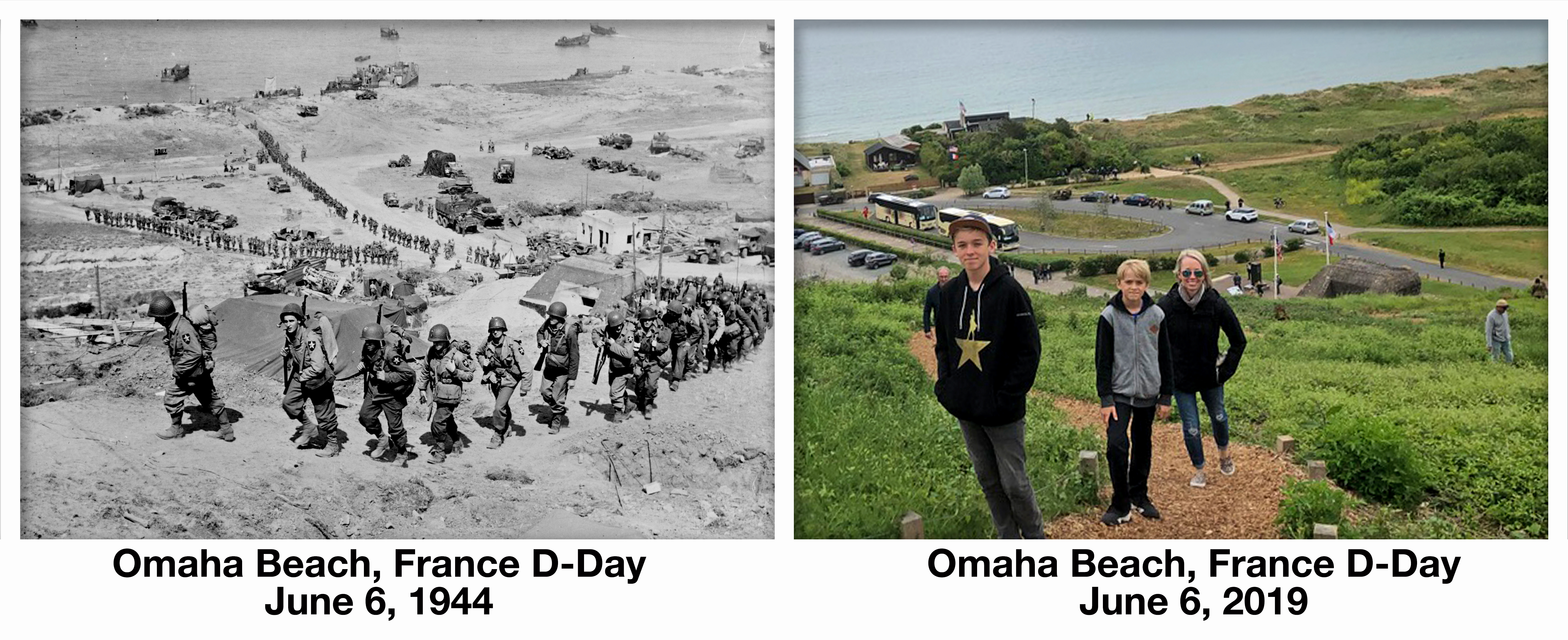
Long before their occupation of Rome and eventual defeat, the Nazis had a strong presence in Italy. After the Italian surrender and 9 month Nazi occupation, US tanks and troops pour into the Roman capital in June of 1944 at the same time allied troops were storming the beaches in Normandy far to the north.
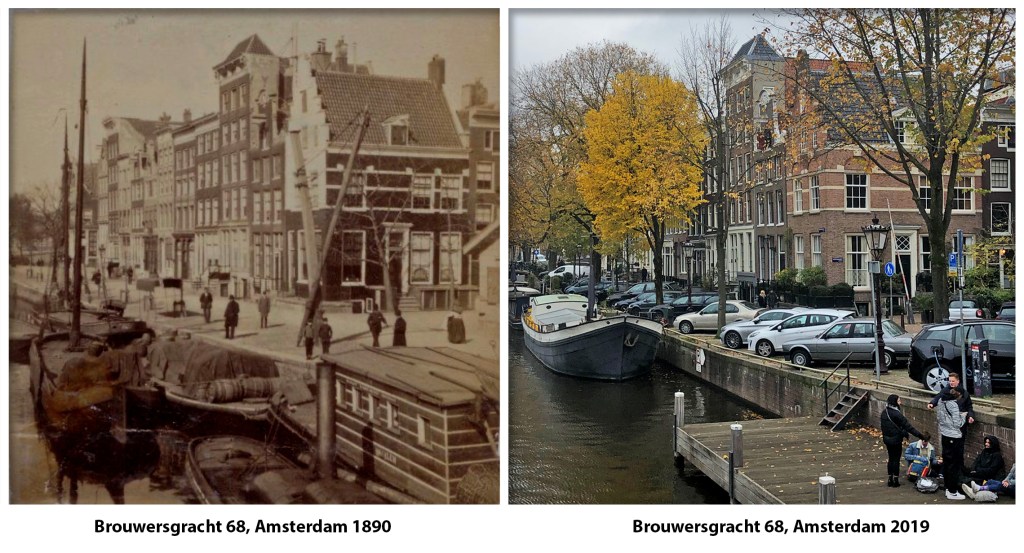
Found a few new before and after photos this week in Amsterdam. This is a target rich city as so little has changed on the streets over the past century.
Beschrijving Hartenstraat 19-21, Amsterdam – 1893Beschrijving Van Baerlestraat 98, Amsterdam – 1894 Beschrijving Leprozengracht, Amsterdam gezien naar de Mozes en Aäronkerk. Na demping in 1882 werd dit het Waterlooplein – 1862 to 1882
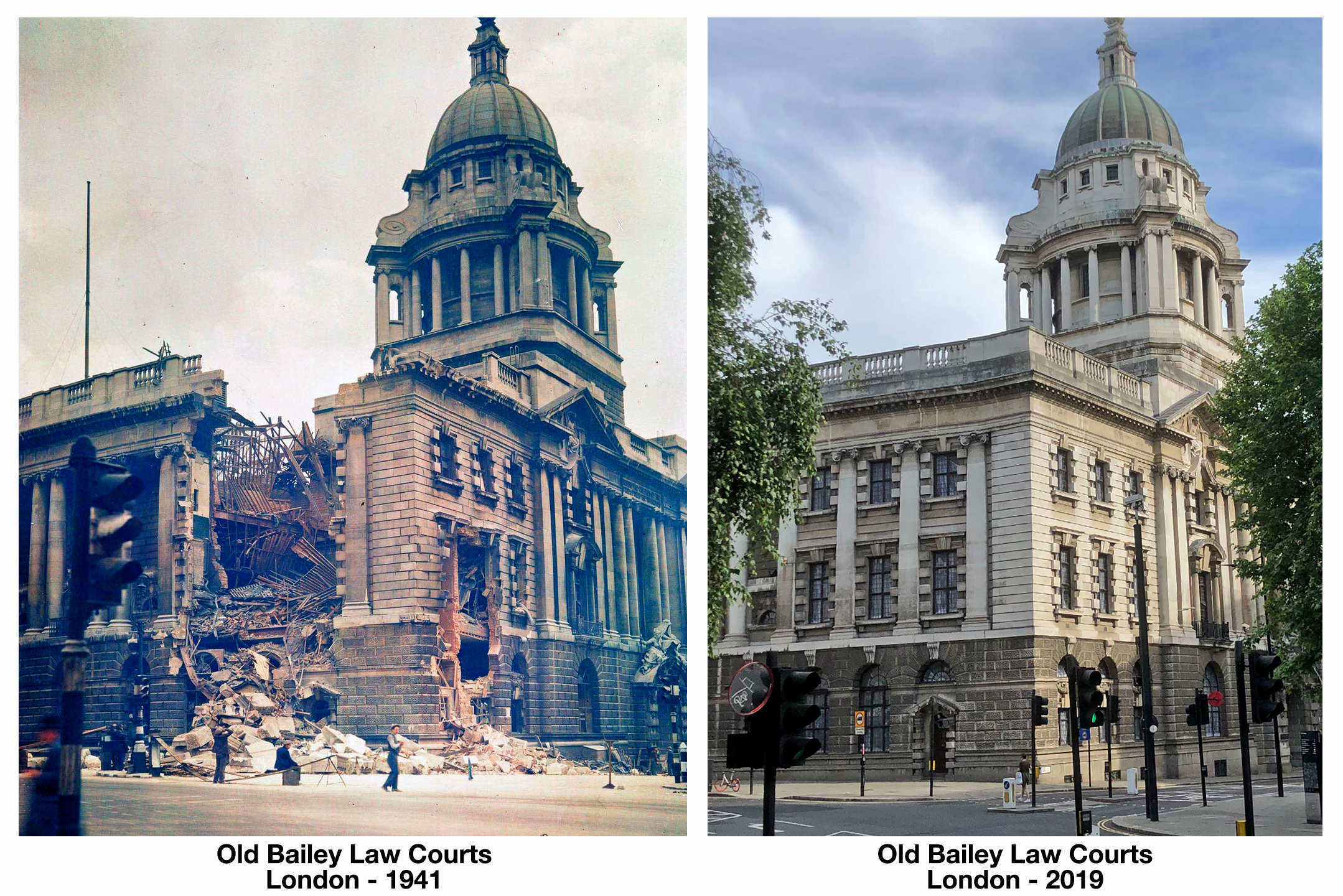
The Blitz was a German bombing campaign against Britain in 1940 and 1941, during the Second World War. The term was first used by the British press and is the German word for ‘lightning’.[4]
The Germans conducted mass air attacks against industrial targets, towns, and cities, beginning with raids on London towards the end of the Battle of Britain in 1940, a battle for daylight air superiority between the Luftwaffe and the Royal Air Force over the United Kingdom. By September 1940, the Luftwaffe had failed and the German air fleets (Luftflotten) were ordered to attack London, to draw RAF Fighter Command into a battle of annihilation.[5][6]Adolf Hitlerand ReichsmarschallHermann Göring, commander-in-chief of the Luftwaffe, ordered the new policy on 6 September 1940. From 7 September 1940, London was systematically bombed by the Luftwaffe for 56 out of the following 57 days and nights.[7] Most notable was a large daylight attack against London on 15 September.
The Luftwaffe gradually decreased daylight operations in favour of night attacks to evade attack by the RAF, and the Blitz became a night bombing campaign after October 1940. The Luftwaffe attacked the main Atlantic sea port of Liverpool in the Liverpool Blitz and the North Sea port of Hull, a convenient and easily found target or secondary target for bombers unable to locate their primary targets, suffered the Hull Blitz. Bristol, Cardiff, Portsmouth, Plymouth, Southampton and Swansea were also bombed, as were the industrial cities of Birmingham, Belfast, Coventry, Glasgow, Manchester and Sheffield. More than 40,000 civilians were killed by Luftwaffe bombing during the war, almost half of them in the capital, where more than a million houses were destroyed or damaged.[1]
In early July 1940, the German High Command began planning Operation Barbarossa, the invasion of the Soviet Union.[8] Bombing failed to demoralise the British into surrender or do much damage to the war economy; eight months of bombing never seriously hampered British war production, which continued to increase.[9][10] The greatest effect was to force the British to disperse the production of aircraft and spare parts.[11] British wartime studies concluded that cities generally took 10 to 15 days to recover when hit severely, but exceptions like Birmingham took three months.[11]
The German air offensive failed because the Luftwaffe High Command (Oberkommando der Luftwaffe, OKL) did not develop a methodical strategy for destroying British war industry. Poor intelligence about British industry and economic efficiency led to OKL concentrating on tactics rather than strategy. The bombing effort was diluted by attacks against several sets of industries instead of constant pressure on the most vital.[11][12]
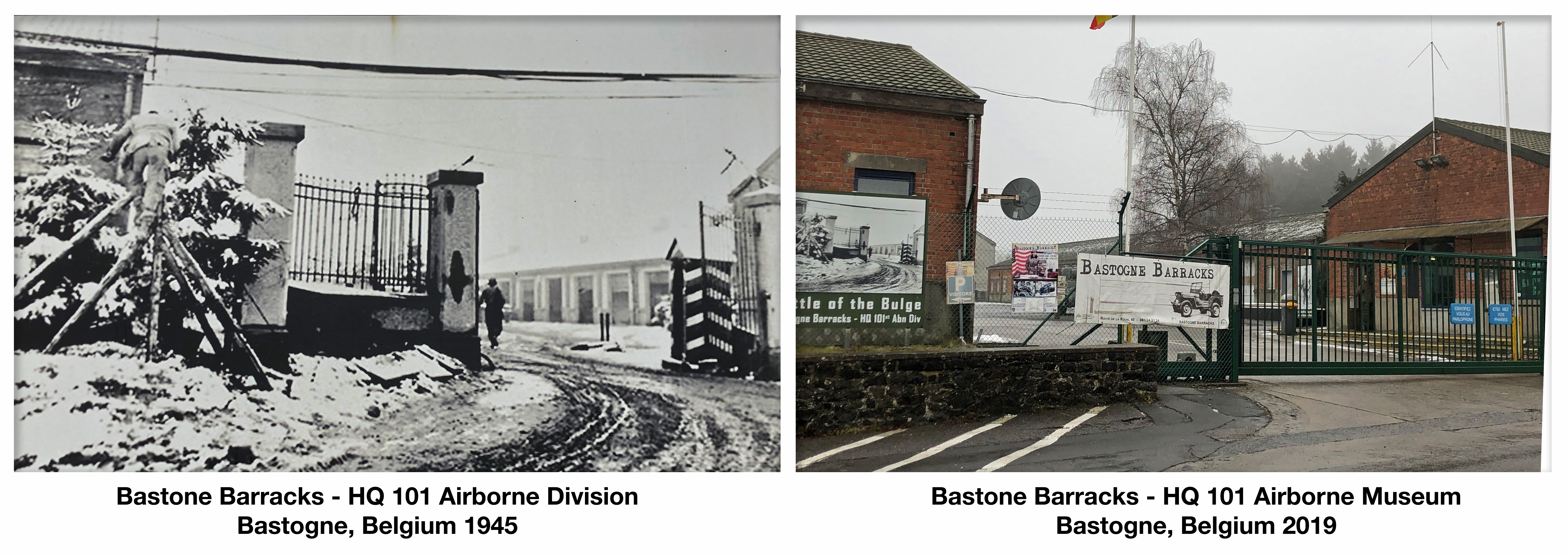
I would like to thank Mr. Henri Mignon for spending he day showing me a around the Bastogne area and sharing so many incredible stories and memories with me. It was an experience that stay with me for all my life.
Henri was borne on the Bulge battlefield in 1936 in Houffalize, close to Bastogne. He spent 6 years studying Greek and Latin in the “Petit Séminaire de Bastogne” which became the Headquarters of the 501st (101st Airborne) during the siege of Bastogne. Please visit his website and contact him for a tour of more information: http://www.mardasson.com















 History Then and Now